
You provide an agreed scope
Complete programs from one application, with the supporting artifacts needed to interpret them in context.
COBOL
JCL
Copybooks
Discovery 1.0 recovers the business model encoded in legacy applications: business rules, processes, terminology and data relationships connected to supporting source evidence.

The altitude80 Workbench is the shared knowledge environment. Discovery 1.0 is its licensable, read-only first module. It recovers business meaning from existing code and creates the first version of a durable model your people can review and your systems and agents can query.
Complete programs from one application, with the supporting artifacts needed to interpret them in context.

Purpose-built, repeatable program analysis identifies technical execution. Discovery separates the business meaning and expresses it in language people can review.

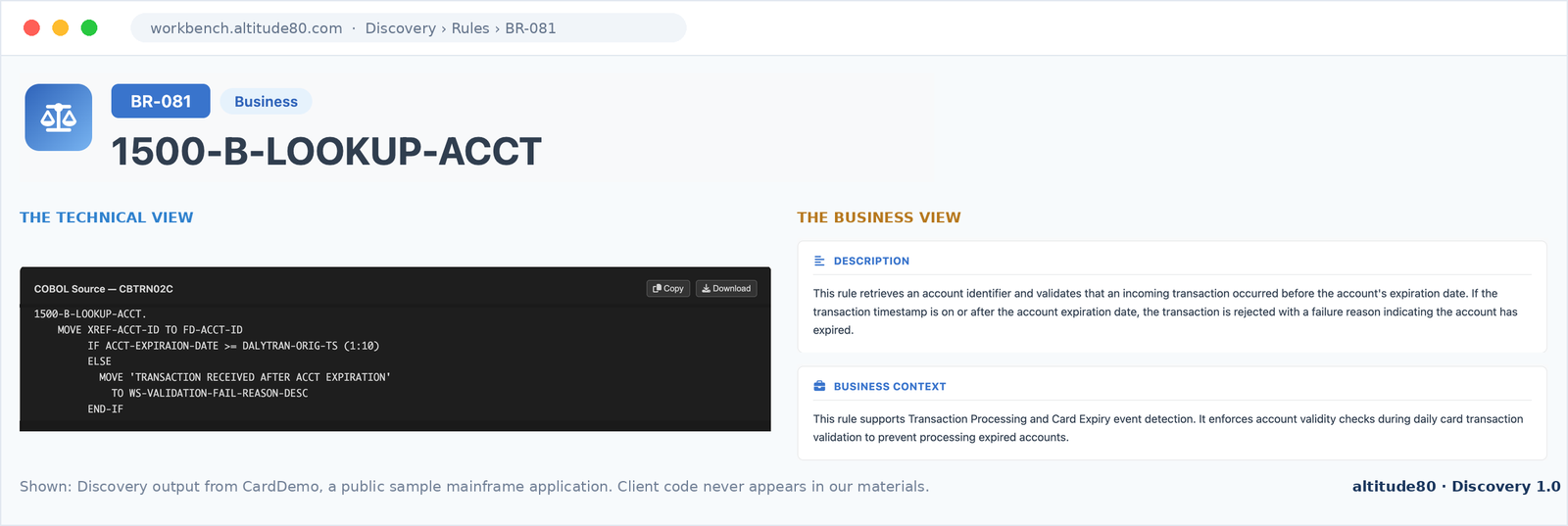
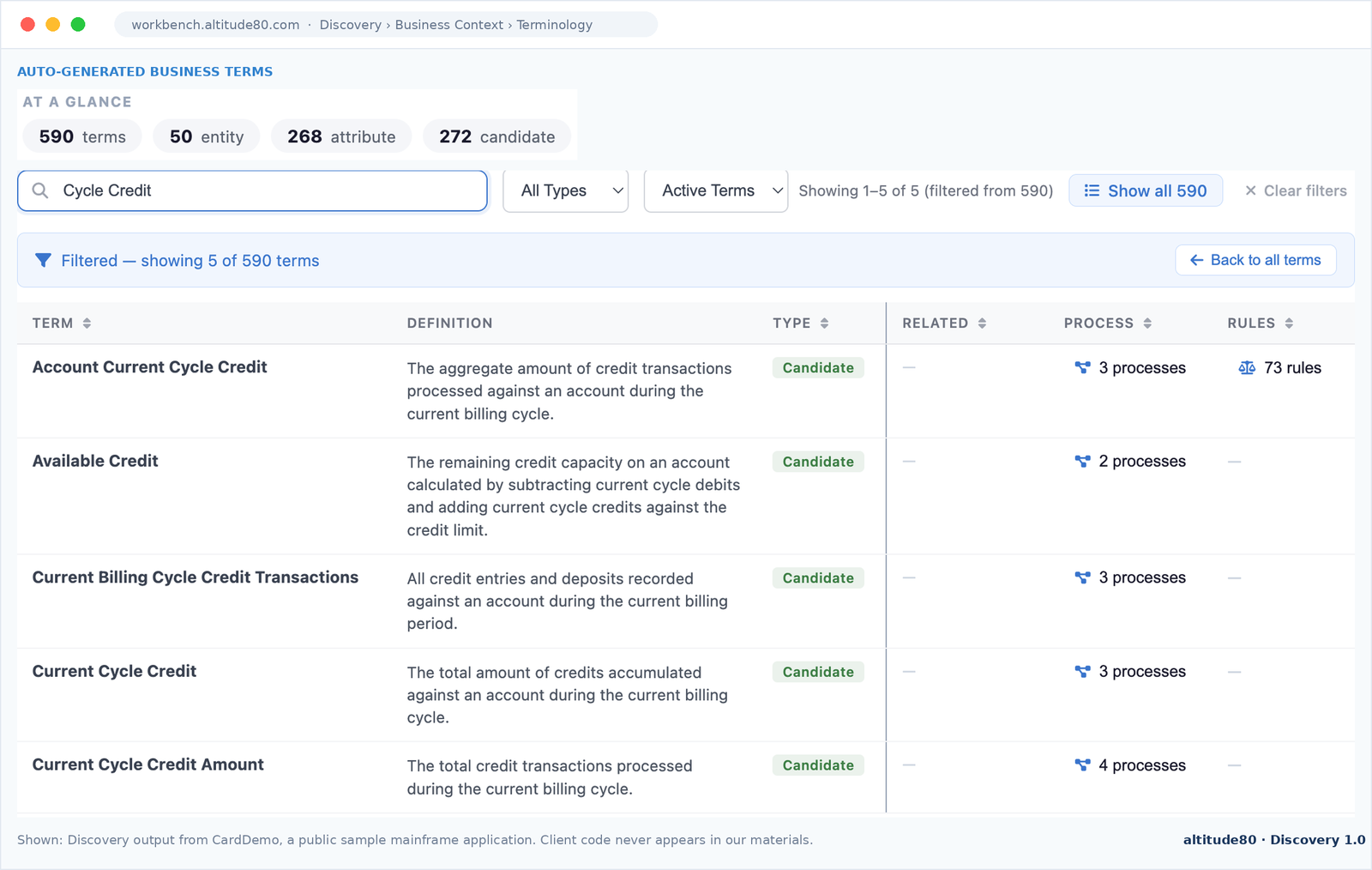
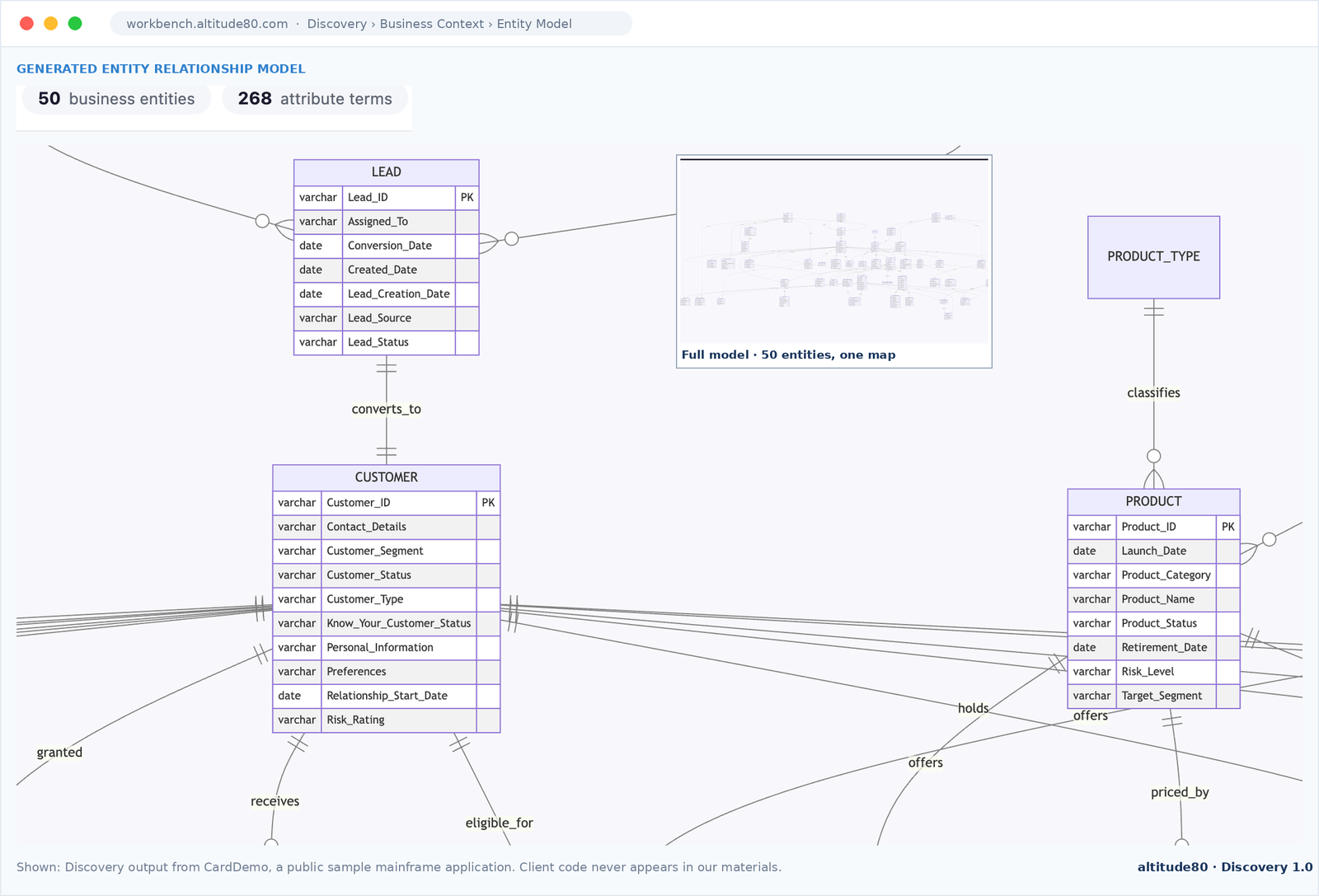
Business rules, terms, events, processes, data and program relationships remain linked to their source.
Architecture analysis is useful for seeing software structure. Discovery goes further by recovering what that software means to the business.
Components, calls, dependencies and data movement explain the mechanics of the application.
Policies, decisions, obligations, terminology and processes explain the business encoded inside it.
Discovery produces an evidence-backed business model, not a logic dump or architecture inventory.
This is not a set of reports that goes stale. The Workbench preserves a grounded record of how the business operates and lets each person examine the view needed for the decision in front of them.


Business rules express its policies, decisions and obligations. Terms, events and processes provide the context in which those rules operate.

Data meaning, lineage, entities, program calls and dependencies reveal how the application carries out the business.

Findings remain traceable to source. Validated knowledge can then inform stories, acceptance criteria and what should happen next.
How is eligibility actually determined?
Which processes depend on this data?
What changes if we adjust this rule?
Discovery does not ask you to accept a summary on faith. Business findings stay connected to the evidence that produced them.
Repeatable program analysis identifies what the application does before AI expresses the finding in business language.
Business and technology experts can review each statement beside the exact code and data that support it.
The business meaning and its proof remain connected for decisions, future changes, delivery and governed agents.
This 75-second product overview shows Discovery 1.0 presenting source code beside business rules, terminology and connected context. The views use CardDemo, a public sample mainframe application.
Workbench Discovery 1.0 in 75 seconds. Captions included; sound optional.
Whether an organization adds AI agents incrementally or transforms outright, the agents inherit the same dependency: decades of rules, vocabulary and process that live today inside legacy code. Agents can be trusted with operations only when they work from a model of the business that people have verified. That model is what Discovery builds.
Results from a financial-services engagement. These figures describe the 20 programs provided for the engagement, not the client’s entire application portfolio.
Discovery 1.0 starts by making business rules explicit, connected and traceable without changing the source. The broader Workbench is designed to let people validate and manage that knowledge separately as technology and business needs change.
Explore the Workbench lifecyclePractical thinking and client evidence for leaders responsible for applications whose business meaning is difficult to see.
Select complete programs and supporting artifacts that contain a meaningful business function. The first review shows what knowledge is buried, how it connects and whether the evidence answers the decision in front of you.